TourRadar. I steered leadership away from paying for an agency redesign and toward fixing what actually made people hesitate to pay thousands for a tour.
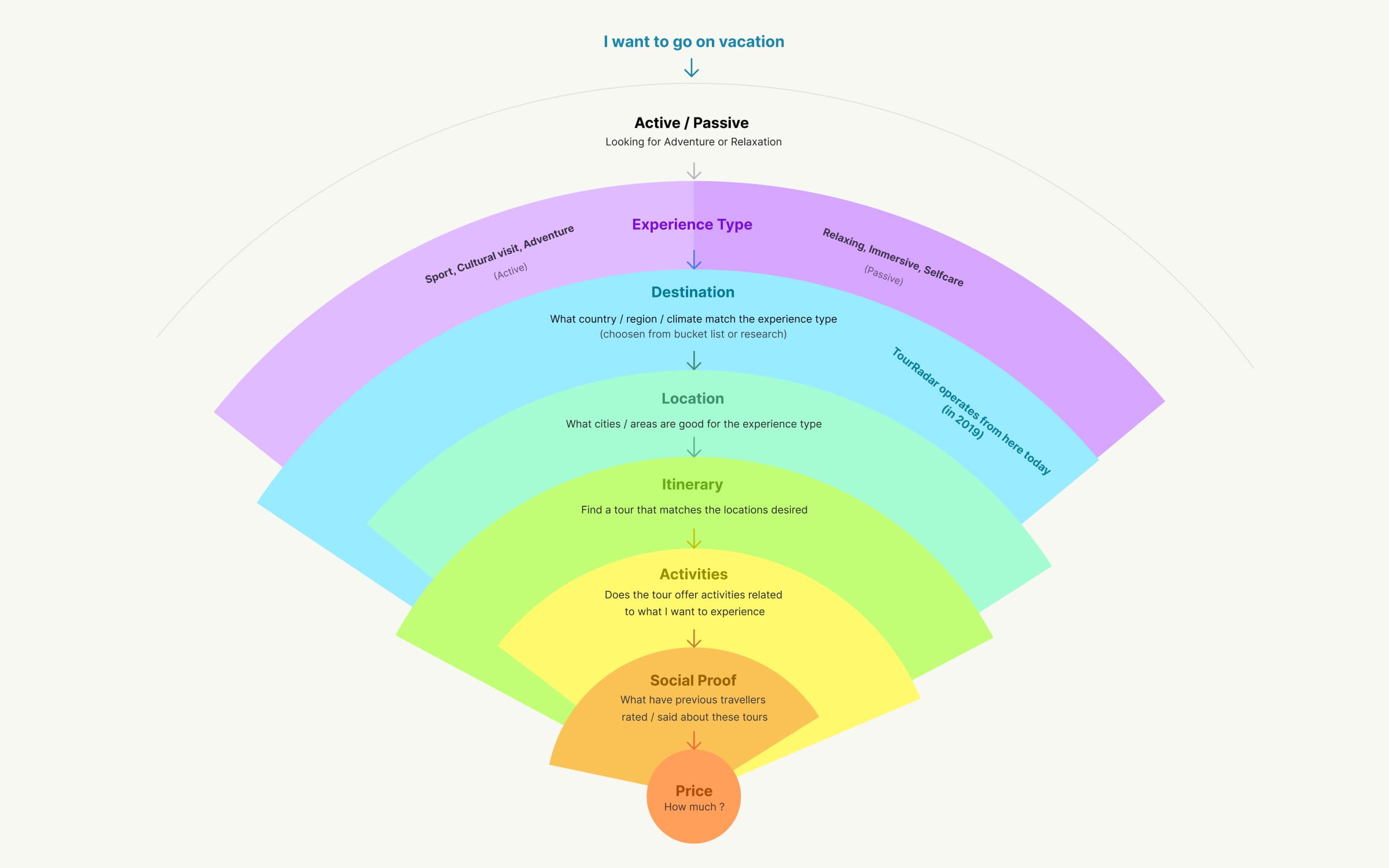
We researched how people decide on a multi-day tour, a segment of the travel industry few have studied. The model showed TourRadar only entered at the destination stage. These learnings fed our Jobs-to-be-Done framework and our vision designs.
Rather than simply redesigning the existing pages, we started our vision designs by refreshing the brand (design tokens, brand colors, content strategy), and scrutinized where our flows failed.
We redesigned them around a new acquisition strategy (help users voice their dream and make it achievable as our JTBD framework taught us) and new activation patterns — wishlisting and lifecycle comms. Where TourRadar used to prioritize raw page view numbers, we planned on building smarter nudges, frictionless flows and a more rational growth strategy.
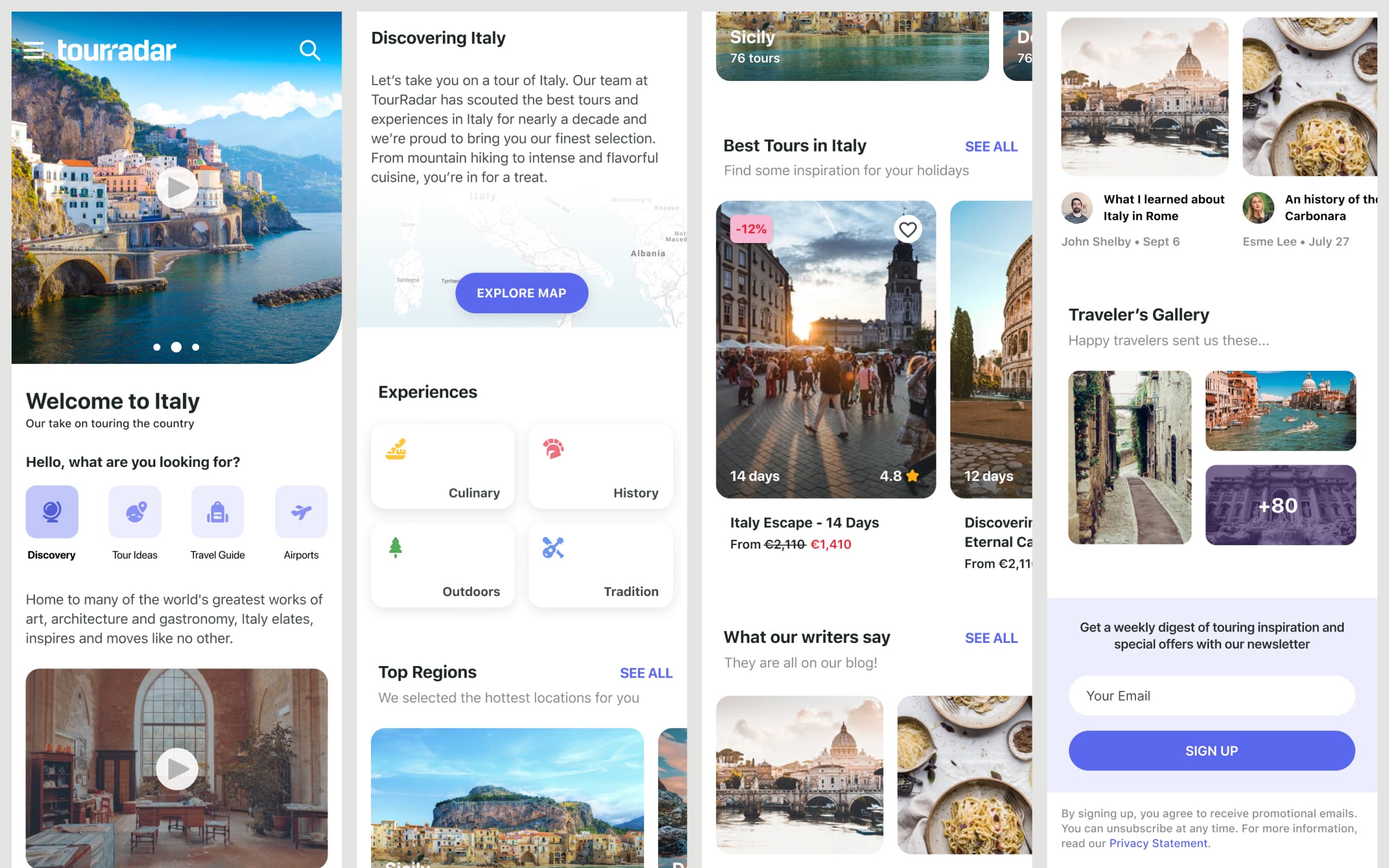
Vision landing page in detail: insights turned into features that inspire travellers and create an emotional connection, designed to lift every metric and establish TourRadar as the leader in organized tours.
Sadly, Covid stopped us from reaching the full vision. But the A/B tests we set up to progress toward it led us to strong improvements across all flows, like on this Italian tour detail page, with wishlisting, time-to-purchase, onpage-content discovery...
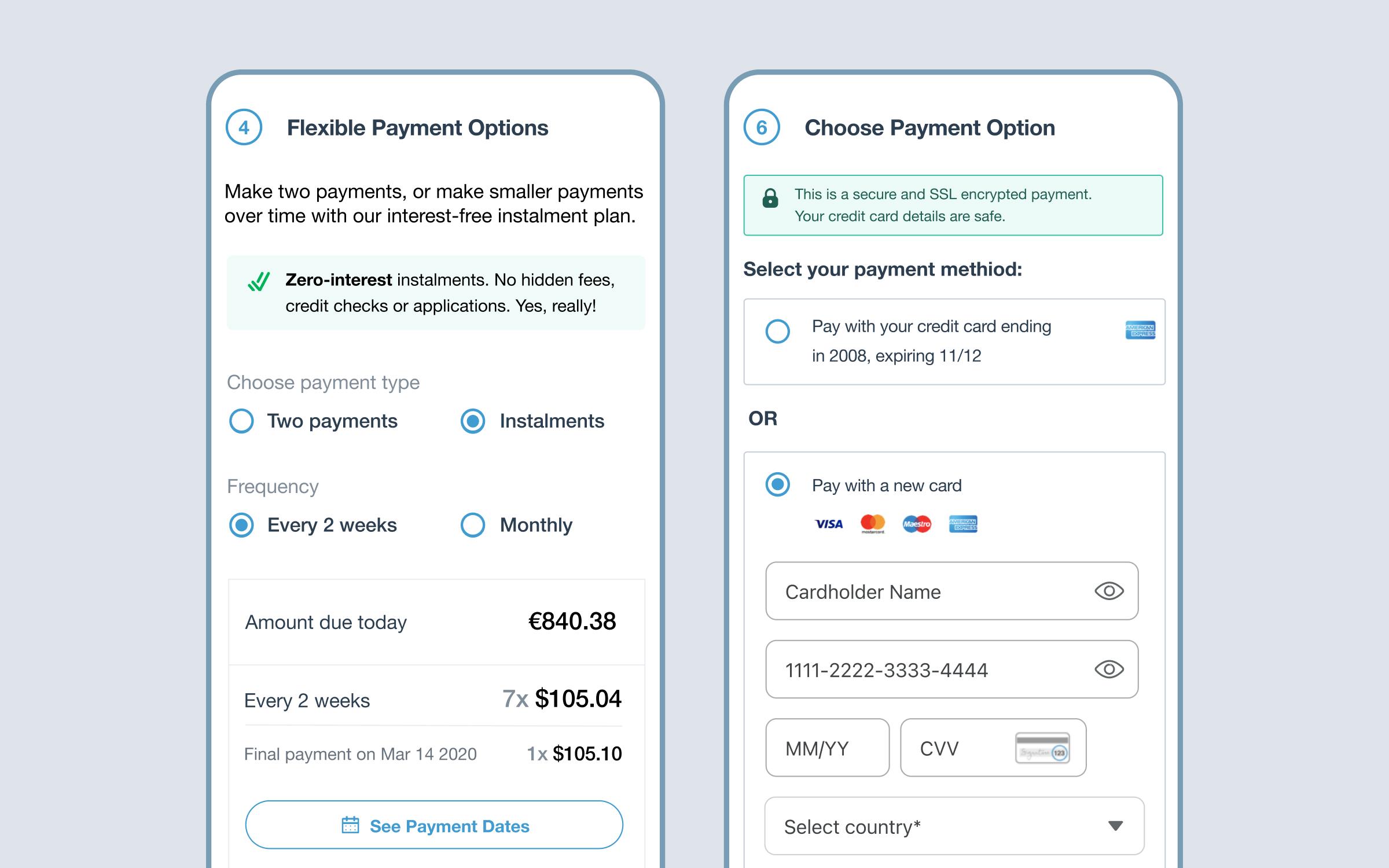
The new checkout, built on a cleaned-up pricing architecture, so prices stay clear and stable from the tour page to payment.
How I grew the team into a two-layer org: an hybrid lead/design manager led UX-heavy and research programs, while I led product experience, UI and the design system. People management stayed with me.